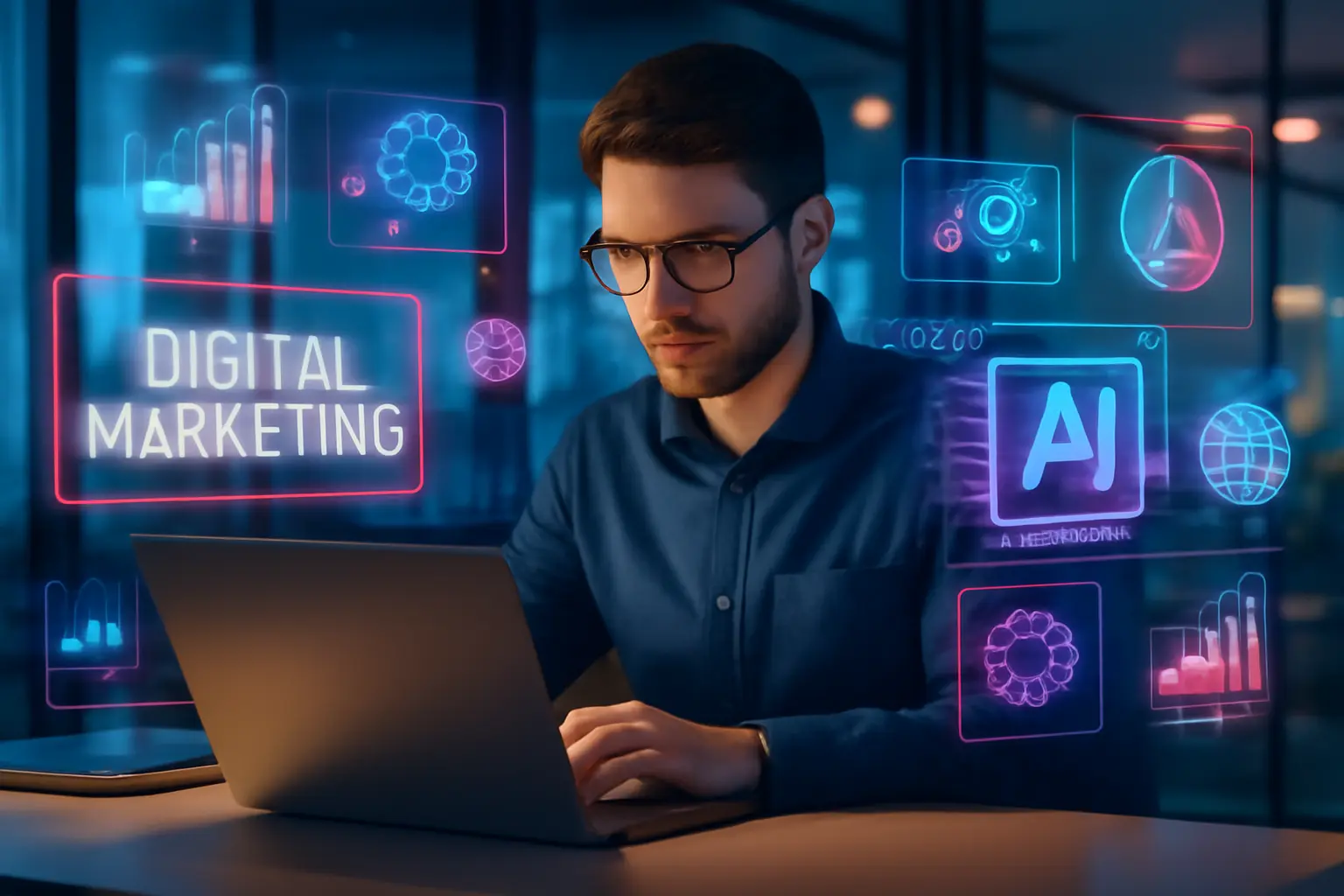
AI integration is revolutionizing digital marketing strategies for better personalization and efficiency in 2025
Loading...
Introduction
Honestly, the way I approach marketing today feels worlds apart from just a few years back. The big game-changer? AI. Artificial intelligence isn’t just a fancy buzzword anymore; it’s become part of how brands connect, engage, and sell. From automated content creation to hyper-personalized campaigns, AI is shaping digital marketing strategies like never before.
How AI is Transforming Digital Marketing
AI is revolutionizing marketing across the board, changing how data is analyzed, campaigns are designed, and customers are reached. Traditional marketing often relied on broad demographics and intuition. Now, AI analyzes countless data points in real-time to uncover consumer patterns and predict behaviour Harvard DCE.
Marketers use AI to:
Automate repetitive tasks such as scheduling posts and sending emails
Analyze customer sentiment and social media trends
Optimize ad placements and content delivery dynamically Survey Monkey.
Key Benefits of AI Integration in Marketing Strategies
Integrating AI brings real perks that changed my daily workflow drastically:
Benefit
What It Means for Marketers
Example
Personalization at Scale
Tailored recommendations and messaging
Netflix recommendations
Predictive Analytics
Forecast consumer behavior and campaign outcomes
Retail product demand forecasting
Automation
Save time and reduce manual errors
AI-generated social media calendars
Data-Driven Decisions
Insights from large, complex datasets
Real-time sentiment analysis
AI Tools Powering Marketing Success
The AI toolkit for marketing is vast—and growing. Some tools I’ve found indispensable:
ChatGPT: Content ideation, drafting emails, and creating ad copy
Adobe Sensei: Image and video analysis for enhanced creative campaigns
HubSpot AI: Automated lead scoring and campaign management
Google Marketing Platform: Data integration and campaign optimization
Jasper AI: SEO-friendly blog and social content generation Harvard DCE.
Personalization and Predictive Analytics
One thing that really fascinates me about AI is how it powers hyper-personalization. AI doesn’t just segment by age or gender anymore; it predicts what an individual customer will want next based on their unique behaviour Adobe report.
Predictive analytics helps marketers anticipate trends and tailor offerings dynamically, maximizing customer engagement and loyalty Insider.
Challenges and Considerations
Nobody’s perfect, right? AI integration comes with its hurdles:
Data Privacy: Balancing rich customer insights with respecting privacy laws and ethics
Skill Gaps: Many marketers need upskilling to fully leverage AI tools
Overreliance: AI is a tool, not a substitute for strategic thinking or creativity
Despite these, the momentum is clear: companies investing in AI-driven marketing tend to outperform others Harvard DCE.
Real-Life Anecdotes of AI in Marketing
From my experience, early adoption of AI tools brought noticeable results. For instance, a colleague used AI-driven predictive analytics to refine their email campaign timeframe. The outcome? A 25% increase in click-through rates simply by sending messages when customers were most likely to engage.
Another example came from a small ecommerce brand using AI to automate product descriptions. It freed hours of work weekly and improved SEO rankings simultaneously.
FAQs
1. How is AI changing the way marketers work daily?
AI automates repetitive tasks and offers data-driven insights, freeing marketers to focus on creativity and strategy SurveyMonkey.
2. Can AI personalize marketing without invading privacy?
Yes, with proper data management and compliance with privacy laws, AI can personalize respectfully and effectively Adobe Report.
3. What are some beginner-friendly AI marketing tools?
Tools like ChatGPT for content, HubSpot AI for campaign management, and Jasper AI for SEO content creation are great starting points Harvard DEC.
4. Does AI replace human marketers?
No. AI is an assistant that enhances efficiency and decision-making but doesn’t replace human creativity or strategy Harvard DCE.
5. What challenges come with AI integration in marketing?
Data privacy, skill gaps among marketing teams, and risk of overreliance without strategic oversight are key challenges SurveyMonkey.
Conclusion
Integrating AI into digital marketing isn’t just a trend—it’s fundamental to staying competitive in 2025. It helps marketers deliver sharper insights, real-time personalization, and campaign automation that improves ROI. Having experienced this shift first hand, I encourage every marketer to embrace AI as a powerful partner rather than a threat.
Ovais Mirza, a seasoned professional blogger, delves into an intriguing blend of subjects with finesse. With a passion for gaming, he navigates virtual realms, unraveling intricacies and sharing insights. His exploration extends to the realm of hacking, where he navigates the fine line between ethical and malicious hacking, offering readers a nuanced perspective. Ovais also demystifies the realm of AI, unraveling its potential and societal impacts. Surprisingly diverse, he sheds light on car donation, intertwining technology and philanthropy. Through his articulate prose, Ovais Mirza captivates audiences, fostering an intellectual journey through gaming, hacking, AI, and charitable endeavors.
Disclaimer: The articles has been written for educational purpose only. We don’t encourage hacking or cracking. In fact we are here discussing the ways that hackers are using to hack our digital assets. If we know, what methods they are using to hack, we are in very well position to secure us. It is therefore at the end of the article we also mention the prevention measures to secure us.