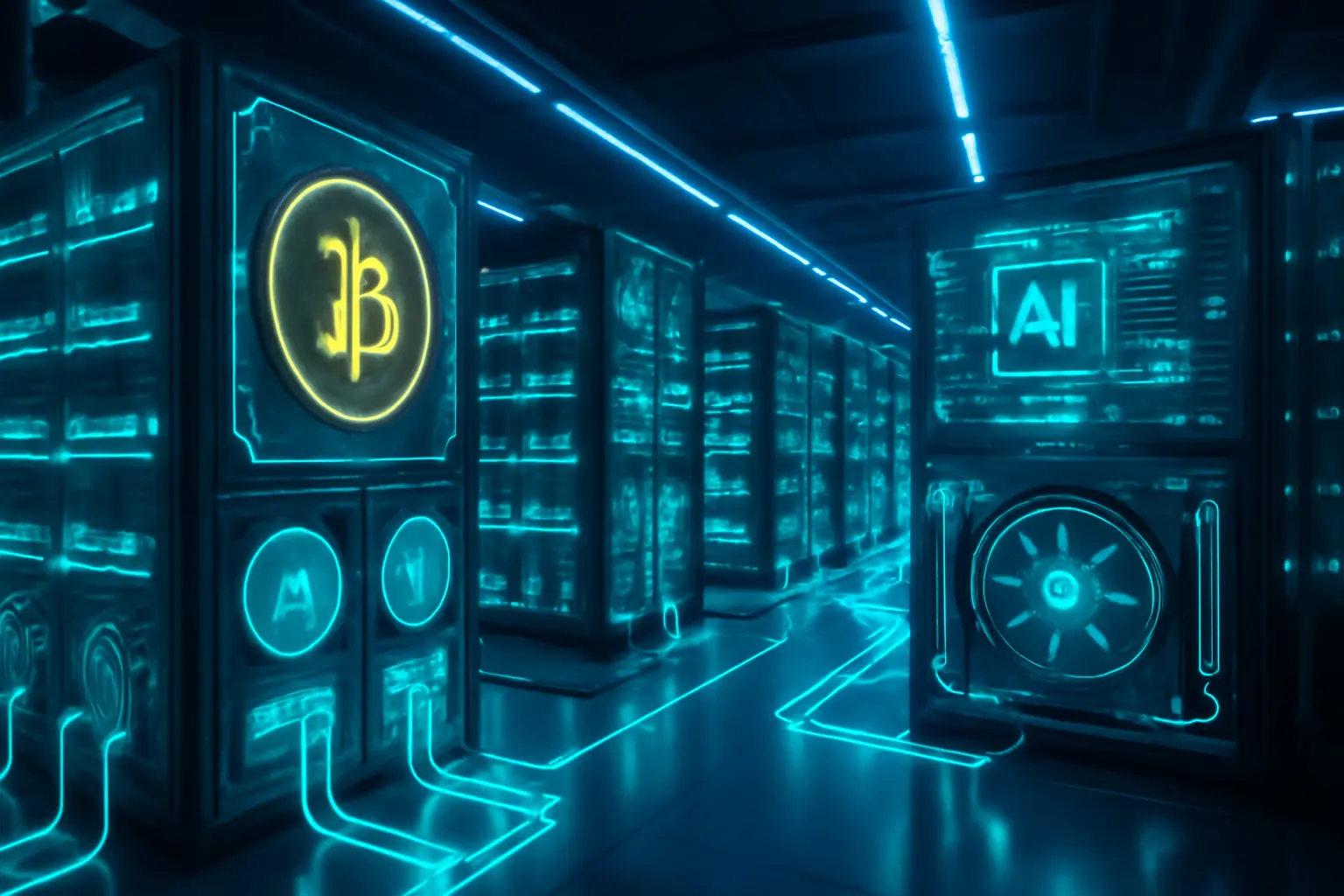
Bitcoin miners transforming crypto mining through AI integration and hybrid compute models
Loading...
Introduction
It’s funny how I used to think Bitcoin mining was all about crunching numbers to secure the blockchain. Well, fast forward to 2025, and the game’s changed dramatically. Bitcoin miners aren’t just mining anymore—they’re diving headfirst into artificial intelligence (AI) integration to modernize their operations and open new revenue streams. This shift is as much about survival as it is innovation.
The Evolution of Bitcoin Mining
Back in the early 2020s, Bitcoin mining was primarily defined by massive energy consumption and fierce competition focused purely on hashing power. Facilities often ran 24/7, performing trillions of calculations to validate Bitcoin transactions. However, the 2024 Bitcoin halving cut block rewards in half, squeezing miners’ margins. Plus, increasing energy costs and heightened regulations pushed mining companies to rethink their approach.
By mid-2025, many mining firms are transitioning from purely crypto-focused operations to hybrid data centres supporting AI workloads. This shift is not just economic but strategic, leveraging existing infrastructure to meet booming demand for AI compute power.
Why AI Integration is a Strategic Move for Bitcoin Miners
At first glance, Bitcoin mining and AI may seem worlds apart, but they share overlapping infrastructure needs:
Massive electrical capacity: Mining farms handle multi-megawatt loads, ideal for power-intensive AI workloads.
Efficient cooling systems: Both mining and AI data centers require robust thermal management.
Low-latency networking: High-speed connections essential for cryptocurrency transaction validation also serve AI processing.
Expertise in automation: Miners pioneered remote management and automation, skills transferable to AI cluster operations.
With AI training and inference demands skyrocketing, these miners are uniquely positioned to pivot and rent out GPU-rich rigs for AIChainUp.
Benefits of AI Integration in Crypto Mining Operations
Here’s a quick table to break down the core benefits:
Benefit
Description
Impact
Diversified Revenue
New income streams beyond volatile crypto earnings
Financial stability and growth
Optimized Infrastructure
Dual-use facilities for blockchain and AI computing
Higher resource utilization
Future-Proofing
Adaptation to evolving tech landscape
Long-term competitiveness
Enhanced Sustainability
Potential for using AI to optimize energy efficiency
Lower carbon footprint
High-Profile Examples of Miners Pivoting to AI
Several notable companies are leading the charge:
Core Scientific: After bankruptcy in 2022, now a major AI infrastructure provider offering GPU cluster rentals to startups and research labs.
Bitfarms: Converted Quebec facilities for AI training, partnering with universities for open-source AI projects.
Hive Digital Technologies: Runs mixed-use facilities supporting crypto mining, AI inference, and rendering workloads with revenue from AI hosting rapidly expanding.
Marathon Digital: Invested in retrofitting Texas-based mining centres for AI compute leasing while maintaining Bitcoin mining operations.
Challenges and Considerations in AI-Driven Mining
Yet, it’s not all smooth sailing. If I were to be frank:
Capital intensity: Upgrading ASIC-heavy mining rigs to GPU-centric AI clusters requires significant investment.
Technology gap: AI computing and blockchain mining use different processors—miners must adapt and learn new operational nuances.
Regulatory risks: Governments still scrutinize crypto mining; AI data center operations may face different, but complex, rules.
Market volatility: Despite diversification, revenues still face risks from crypto market fluctuations.
Future Outlook: Hybrid Models of Mining and AI
Hybrid models are gaining momentum. Companies like Hive and Iren scale GPU clusters for AI workloads while maintaining Bitcoin mining for steady crypto revenues. This balanced approach creates resilience.
There’s also a clear market trend: the AI crypto market size is projected to grow from USD 3.7 billion in 2024 to approximately USD 46.9 billion by 2034, indicating massive opportunities for miners doubling as AI compute hosts.
FAQs
1. Why are Bitcoin miners integrating AI now?
The 2024 Bitcoin halving reduced mining profitability. Integrating AI allows miners to diversify income with less volatile revenueDatacenters.com.
2. What infrastructure overlaps exist between mining and AI?
Both require high electrical capacity, efficient cooling, reliable networking, and automation skills ChainUp.
3. Are miners abandoning Bitcoin mining?
No, most embrace hybrid models combining crypto mining and AI computing to maximize asset utilization Cointelegraph.
4. What challenges come with AI integration?
Capital costs, technical skill gaps, and regulatory uncertainties are key hurdles for miners transitioning to AI workloads.
5. How big is the AI crypto market expected to grow?
Forecasts predict growth from $3.7 billion in 2024 to $46.9 billion by 2034, driven largely by AI’s integration with crypto mining and tradingMarket.us.
Conclusion
The crypto mining landscape is evolving rapidly. What once was a singular focus on Bitcoin hashing is transforming into a complex dance of crypto and AI workloads sharing cutting-edge infrastructure. Having seen this shift first hand, I believe the future is hybrid—and extraordinarily promising. By embracing AI, Bitcoin miners are reshaping the industry and seizing new opportunities in today’s tech revolution.
Ovais Mirza, a seasoned professional blogger, delves into an intriguing blend of subjects with finesse. With a passion for gaming, he navigates virtual realms, unraveling intricacies and sharing insights. His exploration extends to the realm of hacking, where he navigates the fine line between ethical and malicious hacking, offering readers a nuanced perspective. Ovais also demystifies the realm of AI, unraveling its potential and societal impacts. Surprisingly diverse, he sheds light on car donation, intertwining technology and philanthropy. Through his articulate prose, Ovais Mirza captivates audiences, fostering an intellectual journey through gaming, hacking, AI, and charitable endeavors.
Disclaimer: The articles has been written for educational purpose only. We don’t encourage hacking or cracking. In fact we are here discussing the ways that hackers are using to hack our digital assets. If we know, what methods they are using to hack, we are in very well position to secure us. It is therefore at the end of the article we also mention the prevention measures to secure us.