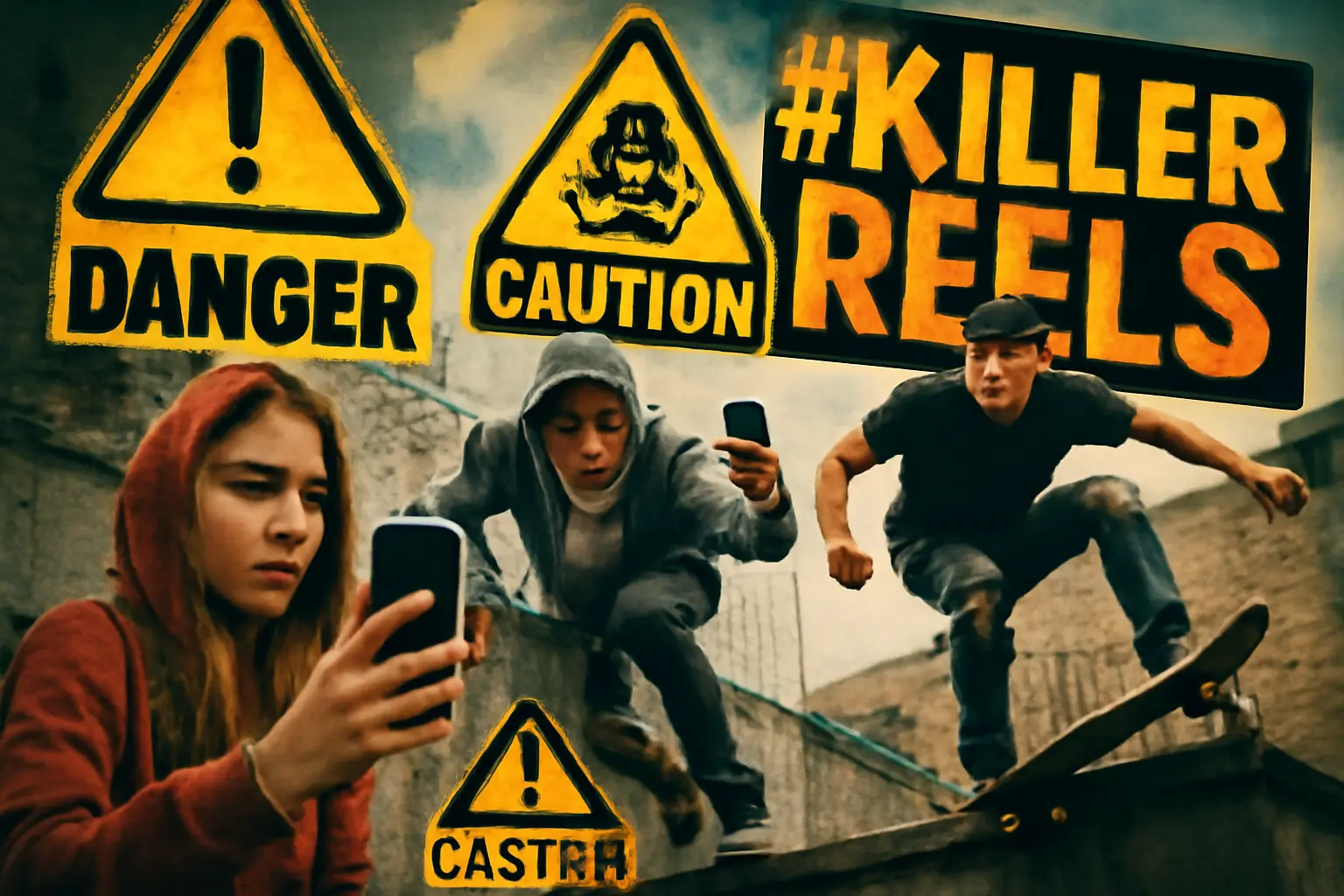
Social media “Killer Reels” trends fueling risky behaviour and tragic incidents globally
Loading...
What Are “Killer Reels”?
We’ve all seen those catchy short videos on Instagram, TikTok, or other social platforms. But lately, some of these reels have taken a dark turn. The phrase “Killer Reels” refers to viral videos where people, especially youths, perform life-threatening or dangerous stunts just to gain views and likes. The trend is fueling concern worldwide for good reasons.
In India, the phrase got heightened attention after several tragic cases this year. These videos aren’t just harmless fun anymore—they are triggering serious injury, death, and social upheaval. The chase for online fame is sometimes costing young lives.
Tragic Incidents Linked to Viral Reels
Sometimes, reading about these events feels surreal. Take Nikki Bhati from Greater Noida, a 26-year-old whose passion for making reels sparked constant family conflict—until it led to her tragic death. It was widely reported that her husband and in-laws pressed her to stop, a demand that ended in fatal violence.
Then there are the risky stunts themselves. In Odisha, YouTuber Sagar Tudu lost his life while filming near treacherous waterfall rapids. A video showing his last moments went viral, serving as a haunting cautionary tale.
Other incidents include fatal bike stunts in Maharashtra, fatal cliff falls in Hyderabad, and reckless high-speed challenges in Uttar Pradesh. Even non-fatal episodes raise eyebrows, such as dangerous dance moves on highways or vehicles driven into the sea—all done for social media fame.
Why Do Young People Take Such Risks?
I’ve wondered why anyone would risk so much for a few seconds of internet fame. Psychiatrists and experts suggest it’s an intense craving for social validation combined with youth impulsivity. The instant gratification from “likes” and “shares” acts like a potent adrenaline shot, pushing young people to go to extremes.
Dr. Santosh Kumar from Nalanda Medical College explains adolescents seek “adventurous, different, or risky experiences” because they want to stand out and attract attention overnight. The pressure is high, especially when peers gain followers by posting daring or shocking content.
Public and Official Reactions
Every new tragedy sparks waves of outrage. Parents warn each other, teachers plead for caution, and police departments launch awareness campaigns. In some places, arrests have been made for filming deadly stunts.
Florida’s Sheriff Mike Chitwood spoke directly about one dangerous prank, cautioning that it could easily end with people getting shot or seriously hurt. Safety advocates emphasize that social media culture often “normalizes” violent or cruel behavior, desensitizing impressionable viewers.
The Global Reach of Dangerous Digital Challenges
This isn’t just an Indian or American issue. Dangerous social media challenges and trends are exploding worldwide. From deadly challenges on TikTok such as the “blackout” or “Benadryl challenge” to reckless behaviors in other countries, the problem transcends borders.
Videos of people lying on train tracks or risking death just to film stunts are found everywhere. In Odisha, three minors were detained for lying on a railway track as a train sped by, a stunt that could have ended in disaster.
What Can Be Done to Prevent These Risks?
Honestly, it’ll take a combined effort. Awareness, education, and supervision are crucial. Parents need to monitor children’s social media use and educate them about the risks of glorifying dangerous acts online. Schools and communities can run workshops on safe online behavior.
Social platforms themselves bear responsibility too. They must enforce stricter content moderation and promote safer challenges. Some police departments have even launched campaigns with slogans like “Don’t make reels your last memory” to dissuade teenagers from fatal stunts.
Final Thoughts
We live in an age where viral fame can come at a terrifying price. “Killer Reels” are a stark reminder that while social media offers fun and creativity, it can also fuel recklessness with deadly consequences. Let’s all do our part—whether as parents, friends, teachers, or creators—to keep one another safe.
FAQs
1. What does “Killer Reels” mean?
It refers to social media videos where people perform dangerous, potentially fatal stunts to gain views and fame.
2. Why are these trends so popular among youths?
Young people crave social validation and adrenaline from likes and shares, which can push them to extreme risks.
3. Are “Killer Reels” incidents limited to India?
No, dangerous social media challenges are a global issue, with incidents reported worldwide.
4. What are officials doing to combat these trends?
Many police departments run awareness campaigns, and some have arrested people filming deadly stunts. Social media companies are also urged to strengthen content moderation.
5. How can parents protect their children from such dangerous trends?
Parents should monitor online activity, educate about risks, and encourage safe, positive social media use.
Ovais Mirza, a seasoned professional blogger, delves into an intriguing blend of subjects with finesse. With a passion for gaming, he navigates virtual realms, unraveling intricacies and sharing insights. His exploration extends to the realm of hacking, where he navigates the fine line between ethical and malicious hacking, offering readers a nuanced perspective. Ovais also demystifies the realm of AI, unraveling its potential and societal impacts. Surprisingly diverse, he sheds light on car donation, intertwining technology and philanthropy. Through his articulate prose, Ovais Mirza captivates audiences, fostering an intellectual journey through gaming, hacking, AI, and charitable endeavors.
Disclaimer: The articles has been written for educational purpose only. We don’t encourage hacking or cracking. In fact we are here discussing the ways that hackers are using to hack our digital assets. If we know, what methods they are using to hack, we are in very well position to secure us. It is therefore at the end of the article we also mention the prevention measures to secure us.