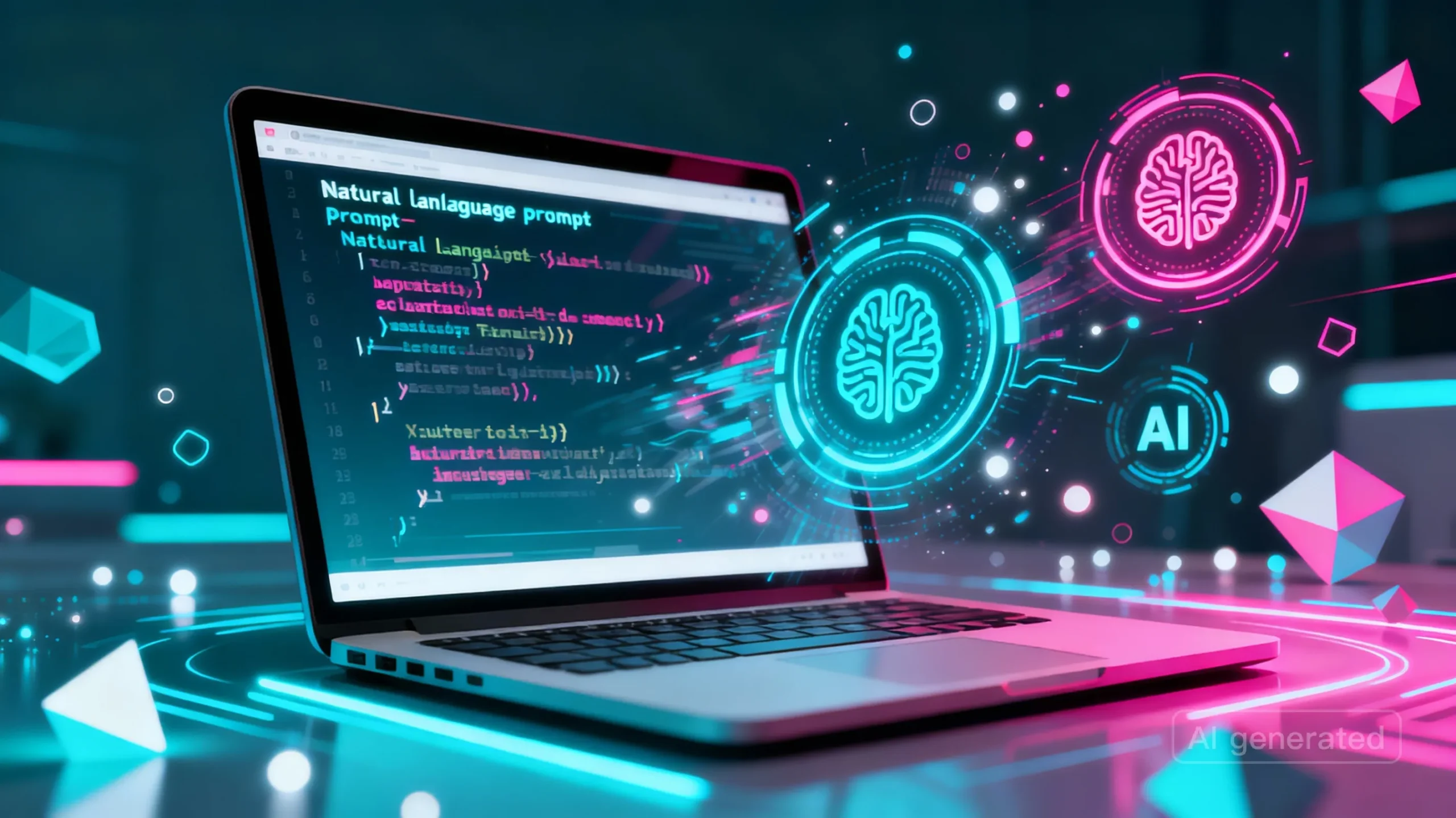
Create apps effortlessly with Google AI Studio’s Vibe Coding interface — 2025 innovation in no-code development
Loading...
What Is Google AI Studio?
If you’re like me, excited about how AI is reshaping the tech world, Google AI Studio is one of the standout platforms to watch in 2025. It’s designed to help developers—and now non-developers—build, test, and deploy AI-powered applications rapidly by combining powerful AI models, cloud services, and APIs.
This platform aims at making app creation simple without sacrificing sophistication. Developers can accelerate their workflows, and even those with no coding background can bring their ideas to digital life.
Introducing the Vibe Coding Interface
You might be wondering what really sets the latest Google AI Studio apart. The answer is the Vibe Coding interface—a massive leap forward in prompt-based app creation.
With Vibe Coding, all you have to do is type what you want—a natural language prompt describing your dream app—and Google’s AI interprets it automatically. It generates the frontend UI, backend logic, database interactions, authentication, and more, giving you a ready-to-preview app that you can deploy instantly or customize further.
Imagine telling your computer: “Build a task manager with login, calendar sync, and push notifications”—and voila! The code, interface, and everything else just appear.
How Vibe Coding Works Step-by-Step
Here’s how I break down the magic behind Vibe Coding:
Step 1: Enter a Prompt
Type your app concept naturally. It can be as simple or detailed as you want. For example, “Create a weather app with GPS location and hourly forecasts.”
Step 2: AI Interpretation
The AI parses your request, breaking it into functional modules. It matches the requirements against pre-built templates, APIs, and popular cloud services.
Step 3: Code Generation
It auto-generates frontend code (React, Flutter, Android, or iOS), backend logic (Node.js, Python, or Google Cloud Functions), user authentication, database integration, and more.
Step 4: Preview & Deploy
You get instant real-time previews and can deploy the app to Google Cloud or export it for deeper customization.
Key Features and Benefits
Single-Prompt App Creation
No tedious step-by-step coding. Just describe your app once, and Vibe Coding handles the rest.
Cross-Platform Support
Web, Android, and iOS apps can be generated from the same prompt.
Customizable Outputs
Developers retain full flexibility to refine or extend the generated code.
API Integration
Supports Google Maps, Firebase, and various third-party APIs out of the box.
Collaboration Tools
Teams can co-edit prompts and review generated apps easily.
Security & Compliance
Built-in privacy checks and security best practices ensure your app meets industry standards.
For developers, Vibe Coding fast-tracks prototyping and reduces repetitive work. For non-technical users, it democratizes app creation, making innovation accessible. Enterprises benefit from cost reduction and scalability for internal tools and customer solutions.
Real-World Applications
The use cases are incredible. Startups can pitch investors with a clickable prototype fast. Educators build custom learning apps for their classrooms. Medical clinics deploy HIPAA-compliant patient scheduling solutions. Retail businesses launch e-commerce apps without large dev teams. Corporate groups automate internal workflows—all from natural language prompts.
Comparison With Other AI Development Tools
How does Google AI Studio’s Vibe Coding stack up against rivals like Microsoft Power Apps and OpenAI Codex? I’d say it’s unique:
Microsoft Power Apps: Low-code solutions focused on enterprises but still require some manual work.
OpenAI Codex: Great for code generation but doesn’t provide end-to-end app deployment like Vibe Coding.
Google AI Studio Vibe Coding: Offers complete app creation, UI generation, backend logic, and deployment all from a single prompt.
Challenges and Future Outlook
Of course, Vibe Coding isn’t perfect. Complex apps with advanced features might still require manual coding and refinement. The accuracy of AI interpretation can vary, necessitating human oversight to fine-tune the app. Security audits should complement automated checks, especially for sensitive data. Non-technical users sometimes face a learning curve in mastering prompt engineering.
Still, the potential for faster innovation cycles and democratized coding is undeniable. This is just the start of AI as a co-developer working in tandem with humans.
FAQs
1. What is the Vibe Coding interface in Google AI Studio?
It’s a powerful new feature enabling app creation from single natural language prompts.
2. Who can use Vibe Coding?
Both developers and non-technical users can leverage it for app development.
3. What platforms are supported?
Google AI Studio generates apps for web, Android, and iOS platforms.
4. Do I need coding skills to use it?
No coding skills are required, but developers can customize and extend the generated code.
5. When will it be available?
The rollout is ongoing in 2025, with global availability expected by early 2026.
Conclusion
Google AI Studio’s Vibe Coding interface is truly revolutionizing app development. By letting anyone create full-fledged apps from a simple prompt, it’s bridging the gap between idea and execution like never before. Whether you’re a developer looking to supercharge prototyping or a non-tech entrepreneur eager to build your own app, this platform is the next big thing in 2025’s AI tech wave.
Get ready to turn words into working apps—fast, flexible, and fun!
Ovais Mirza, a seasoned professional blogger, delves into an intriguing blend of subjects with finesse. With a passion for gaming, he navigates virtual realms, unraveling intricacies and sharing insights. His exploration extends to the realm of hacking, where he navigates the fine line between ethical and malicious hacking, offering readers a nuanced perspective. Ovais also demystifies the realm of AI, unraveling its potential and societal impacts. Surprisingly diverse, he sheds light on car donation, intertwining technology and philanthropy. Through his articulate prose, Ovais Mirza captivates audiences, fostering an intellectual journey through gaming, hacking, AI, and charitable endeavors.
Disclaimer: The articles has been written for educational purpose only. We don’t encourage hacking or cracking. In fact we are here discussing the ways that hackers are using to hack our digital assets. If we know, what methods they are using to hack, we are in very well position to secure us. It is therefore at the end of the article we also mention the prevention measures to secure us.