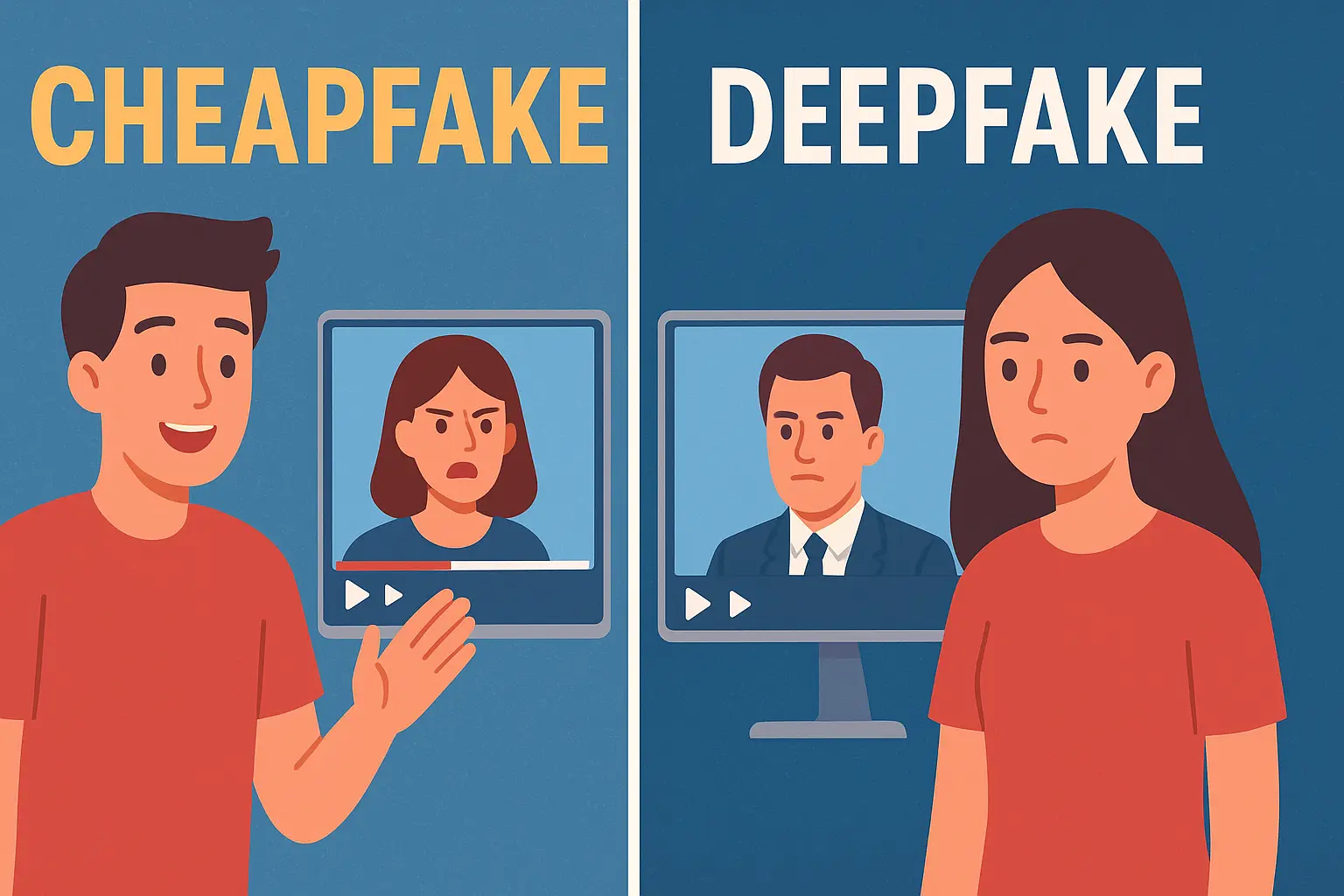
AI-Generated “Cheapfake” Videos spread rapidly across YouTube, exploiting drama and clicks.
Loading...
1. Introduction: The First Time I Saw a Cheapfake
I remember the first cheapfake video I stumbled across. It was late at night, and I was casually scrolling YouTube for something fun before bed. Suddenly, a clip popped up: two celebrities yelling at each other in what looked like a behind-the-scenes fight.
For a moment, I was hooked. It seemed real—until I noticed the weirdly stiff expressions and slightly off lip-sync. My gut said: “Nah, this is fake.” But guess what? The video already had millions of views. That was my first brush with AI-Generated “Cheapfake” Videos, and it left me both curious and unsettled.
2. What Exactly Are Cheapfakes?
The term cheapfake might sound funny, almost cartoonish, but the reality isn’t so harmless. Unlike deepfakes, which rely on advanced AI to create ultra-realistic fake media, cheapfakes are low-effort manipulations—often AI-assisted but not always.
They can be as simple as:
Taking real footage and slowing it down to make someone appear drunk.
Using basic AI tools to generate fake voiceovers.
Stitching celebrity images with sloppy animation to create fake confrontations.
And here’s the kicker: cheapfakes don’t need to be perfect. They just need to grab attention. That’s enough for them to go viral.
3. How They Differ From Deepfakes
A lot of people ask me, “Aren’t cheapfakes just deepfakes, but bad ones?” Well, not exactly.
Deepfakes:
Require advanced AI modeling.
Aim for near-perfect realism.
Are resource-heavy (computationally and time-wise).
Cheapfakes:
Often AI-lite or even just basic editing.
Don’t strive for realism, just believability.
Are quick, cheap, and easy to mass-produce.
It’s like comparing a luxury counterfeit handbag to a fake one from a street stall. Both are fake, but one takes way more skill to pull off.
4. Why Cheapfakes Are Growing So Fast
You may wonder—why now? Why are cheapfakes suddenly everywhere?
Here’s what I’ve observed:
Low Entry Barrier: Tools are free or dirt cheap. Anyone with a laptop can whip up a cheapfake in an afternoon.
Celebrity Obsession: People can’t resist peeking into the “private lives” of stars, even if it’s fake drama.
Clicks = Cash: Creators monetize these videos with ads. The incentive is obvious.
And let’s be honest: sometimes people watch knowing it’s fake—almost like guilty-pleasure entertainment.
5. The YouTube Problem: Outrage Sells
According to Wired’s report, entire channels are now dedicated to pumping out cheapfakes. These aren’t niche corners of the web; they rack up millions of views by exploiting drama-bait.
The problem? Disclosure rules exist, but enforcement is thin. So the cycle continues: upload → outrage → views → money. It’s a feedback loop, and honestly, it works too well.
6. Impacts on Culture, Politics, and Trust
At first, it may feel like harmless fun. Who cares if a fake Tom Cruise argues with a fake Robert Downey Jr.? But the ripple effects run deeper.
Culture: Cheapfakes normalize fake content, making it harder to tell what’s real.
Politics: Altered clips can sway opinions, even elections, by making public figures look foolish or corrupt.
Trust: Every fake chip erodes trust. Over time, audiences might start doubting even genuine media.
And honestly, when trust crumbles, democracy itself feels shaky.
7. Quick Comparison: Cheapfakes vs Deepfakes
Here’s a simple table I put together:
Attribute
Cheapfakes
Deepfakes
Tech Requirement
Low, basic editing or AI-lite
High, advanced AI modeling
Realism
Moderate (sometimes sloppy)
High (near photorealistic)
Speed to Create
Hours or less
Days or weeks
Main Purpose
Clickbait, outrage, entertainment
Persuasion, scams, impersonation
Risk Level
Medium (misinfo + erosion of trust)
High (identity theft, fraud)
8. What Platforms Are Doing (and Not Doing)
YouTube, Meta, and other giants have pledged to crack down on manipulated content. They’ve even rolled out disclosure rules that require labeling AI-generated videos. Sounds nice on paper.
But here’s the truth I’ve seen: enforcement lags. Creators get away with bending rules. Some channels keep churning out cheapfakes despite multiple complaints. Platforms walk a fine line—they don’t want to look careless, but they also don’t want to lose all that ad revenue.
So the system ends up patchy at best.
9. What Can We Do as Viewers?
Honestly, I don’t think the solution lies with tech companies alone. As viewers, we have power too.
Pause Before Sharing: Ask yourself, does this look too wild to be true?
Check the Source: Is it from a random YouTube channel or a verified outlet?
Ovais Mirza, a seasoned professional blogger, delves into an intriguing blend of subjects with finesse. With a passion for gaming, he navigates virtual realms, unraveling intricacies and sharing insights. His exploration extends to the realm of hacking, where he navigates the fine line between ethical and malicious hacking, offering readers a nuanced perspective. Ovais also demystifies the realm of AI, unraveling its potential and societal impacts. Surprisingly diverse, he sheds light on car donation, intertwining technology and philanthropy. Through his articulate prose, Ovais Mirza captivates audiences, fostering an intellectual journey through gaming, hacking, AI, and charitable endeavors.
Disclaimer: The articles has been written for educational purpose only. We don’t encourage hacking or cracking. In fact we are here discussing the ways that hackers are using to hack our digital assets. If we know, what methods they are using to hack, we are in very well position to secure us. It is therefore at the end of the article we also mention the prevention measures to secure us.