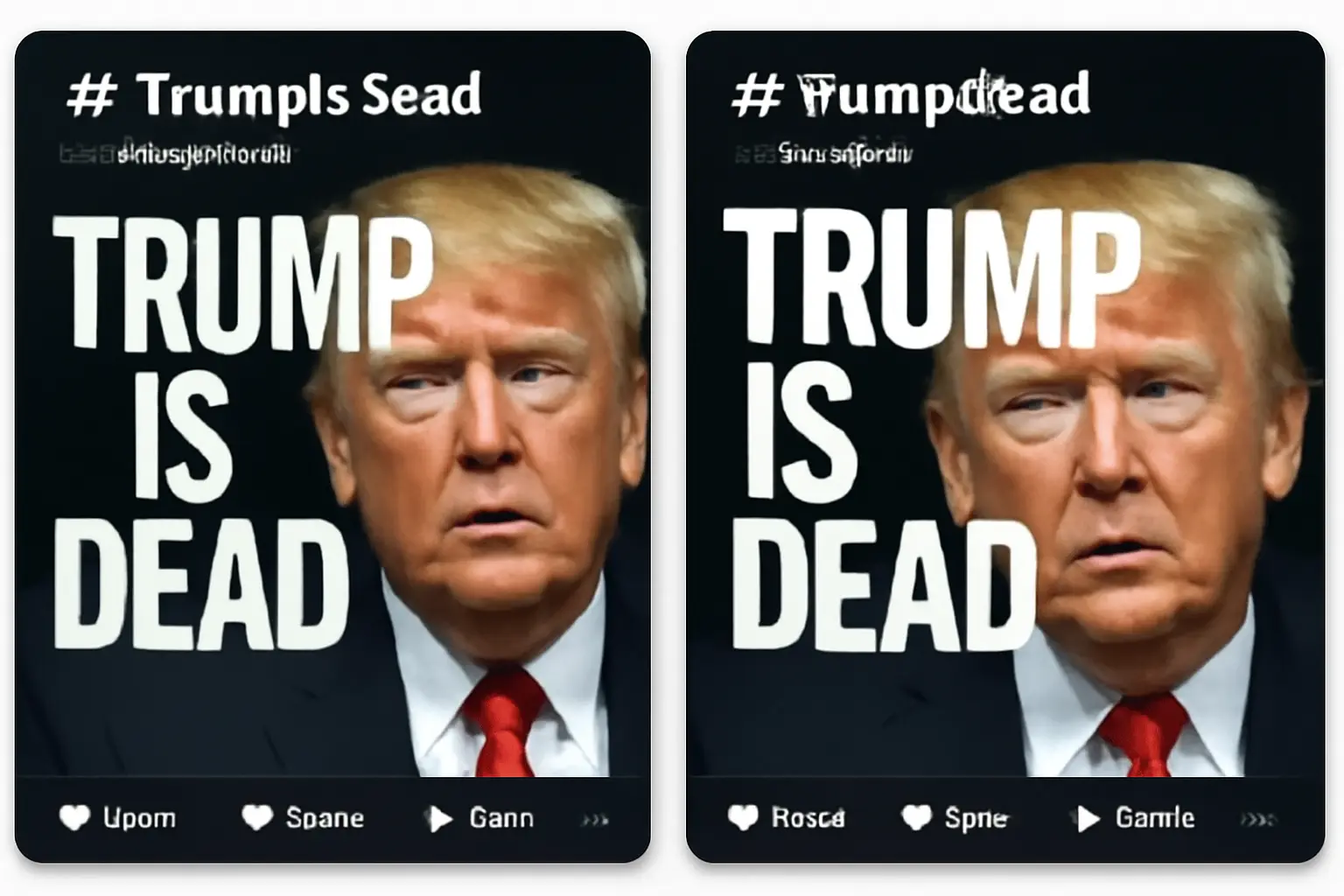
Viral social platform posts fuel Trump death rumours in August 2025
Loading...
The Viral Spread: How It All Began
If you’ve logged into X or TikTok lately, you’ve probably stumbled upon the phrase “Trump is dead.” It swept over social platforms like a tidal wave this past weekend, as thousands of posts speculated about the former president’s status. Panic and confusion filled comment sections while the hashtag “#TrumpIsDead” trended globally, leaving many bewildered.
A casual user could easily be forgiven for feeling a moment of doubt. I, too, found my feed littered with posts asking, “Where is Trump?” and “Did he really die?” But let’s get this straight: there’s been absolutely no official confirmation. The rumour started with fragments of speculation—a Vice President’s comment about presidential succession, some AI-manipulated videos, and a few recycled quotes that snowballed out of control.
Simmering Health Concerns
Trump’s health has lingered in the spotlight for months, especially after he made public appearances with visible bruising on his hand and swelling in his ankles. The White House responded quickly to quell worries, confirming his diagnosis of Chronic Venous Insufficiency, a vein condition common among older adults. His personal physician described the condition as “not life-threatening,” which should’ve laid the rumors to rest.
But here’s where things got complicated: Trump’s limited public appearances, combined with the ever-watchful eye of social media, ramped up concerns that something dire had happened. It doesn’t take much for speculation to ignite online, especially when the subject is someone as polarizing as Trump.
Table: Timeline of the Rumor’s Spread
Date
Event/Trigger
Platform(s)
Outcome
July 2025
Images of bruises/swelling surface
X, Reddit
Initial concern
Aug 24, 2025
Trump last seen in public
Truth Social, X
Absence noted
Aug 27, 2025
JD Vance succession comments
USA Today, X
Speculation spikes
Aug 29, 2025
Viral “Trump is dead” memes and hashtags trend
X, TikTok
Panic, confusion
Aug 30, 2025
White House, influencers debunk rumors
All platforms
Rumors refuted
The White House Response
No government statement is ever dull when the rumor mill is running full-speed. The White House stood firm, claiming Trump was in “incredible shape” and energetically handles presidential duties both day and night. Vice President JD Vance’s now-infamous remark about being ready to lead “if, God forbid, there’s a terrible tragedy” was spun out of context, further fueling speculation.
Meanwhile, Trump himself popped up on Truth Social to rail against an appeals court ruling—alive and kicking, in his signature style. Yet, his absence from live public events over a 72-hour stretch only deepened the mystery, proving just how quickly a “missing from view” narrative can spiral on social media.
The Simpsons “Prediction” Angle
I’ll admit, as a pop culture nerd, I found the Simpsons angle oddly compelling. Was there really an episode predicting Trump’s demise in August 2025? The short answer is no. What spread was a fan-made, AI-edited clip using snippets from various episodes, constructed to look like Simpsons creator Matt Groening had predicted Trump’s death. The internet loves connecting dots between reality and animation, but there’s no credible record of any such prediction.
This isn’t the first time the animated series has been associated with political prophecies, but in this case, the connection was pure fabrication—amplified by the hunger for dramatic news.
The Power of Social Media Memes
Memes are the lifeblood of any modern misinformation campaign. On X (formerly Twitter), over 56,000 posts included “Trump is dead” memes, some purely satirical, others laced with genuine concern. I laughed at a few, cringed at others—the line between joke and fear was thin.
News around Trump’s chronic vein condition became fodder for these viral memes, and soon, they were everywhere. The trend was so overwhelming that fact-checkers, influencers, and even streamers like Adin Ross felt compelled to intervene and clarify that the president was very much alive.
Past Rumors and Hoaxes
Trump is no stranger to internet hoaxes. Back in September 2023, a hacker used Donald Trump Jr’s account on X to announce his father’s death, an episode quickly debunked by major news outlets. Fabricated stories and satirical headlines have followed him for years, with both political allies and opponents manipulating images and quotes for their own ends.
Other incidents, like his well-publicised survival of campaign assassination attempts, have heightened the culture of speculation and meme-making. Every time Trump drops out of sight, the rumor mill kicks in, driven by old episodes, doctored images, or out-of-context remarks.
Why Do Death Hoaxes Go Viral?
So, why are social platforms so susceptible to these death hoaxes? Well, it’s a mixture of factors. Sometimes, all you need is a mysterious absence or one cryptic remark to set things off—especially when the figure in question is as famous (and controversial) as Donald Trump.
Sensational headlines trigger curiosity.
Emotional investment leads to rapid sharing.
Meme culture blurs fact and fiction for humor and engagement.
Trust in official channels erodes when rumors override statements.
The same cycle repeats with every celebrity death hoax. It’s almost a rite of passage for notable figures online.
Impact: The Internet’s Frenzied Reaction
I watched the drama unfold across my feed, noting how even reputable news sources felt pressured to address the rumors directly. Major platforms like X and TikTok were forced to boost fact-checks and issue clarifications. Personalities from streamers to journalists jumped in, amplifying the debunking effort.
Despite repeated official statements and Trump’s own social media activity, confusion persisted. Family, staff, and allies scrambled to assure the public, but many users remained convinced—at least for a few hysterical hours—that something catastrophic had happened.
Final Thoughts
The “Trump Is Dead” trend reveals just how vulnerable our collective online psyche is to wild swings in the rumor mill. It’s also a testament to how meme culture, AI manipulation, and out-of-context soundbites now shape mainstream narratives.
Rumors will always find fertile soil in uncertainty, but the truth—well, the truth still gets out, even if it takes longer to go viral.
FAQs
1. Did Donald Trump die?
No, Donald Trump is alive. The rumours spread rapidly across social media but have been officially debunked by the White House and multiple news sources.
2. What triggered the “Trump is dead” rumour?
It began with a combination of health concerns, a Vice President’s statement about succession, and a fan-made Simpsons video circulating online.
3. Was there a real Simpsons episode about Trump’s death?
No, the supposed episode is a doctored clip constructed using existing footage, and there’s no official record or prediction from The Simpsons.
4. How did social media influence the spread?
Viral memes and hashtags on X and TikTok created confusion and panic, with more than 56,000 posts fueling the frenzy.
5. Have there been previous Trump death hoaxes?
Yes, similar false reports have occurred before, including a hacked social account in 2023 and meme-driven rumors during earlier public absences.
Ovais Mirza, a seasoned professional blogger, delves into an intriguing blend of subjects with finesse. With a passion for gaming, he navigates virtual realms, unraveling intricacies and sharing insights. His exploration extends to the realm of hacking, where he navigates the fine line between ethical and malicious hacking, offering readers a nuanced perspective. Ovais also demystifies the realm of AI, unraveling its potential and societal impacts. Surprisingly diverse, he sheds light on car donation, intertwining technology and philanthropy. Through his articulate prose, Ovais Mirza captivates audiences, fostering an intellectual journey through gaming, hacking, AI, and charitable endeavors.
Disclaimer: The articles has been written for educational purpose only. We don’t encourage hacking or cracking. In fact we are here discussing the ways that hackers are using to hack our digital assets. If we know, what methods they are using to hack, we are in very well position to secure us. It is therefore at the end of the article we also mention the prevention measures to secure us.